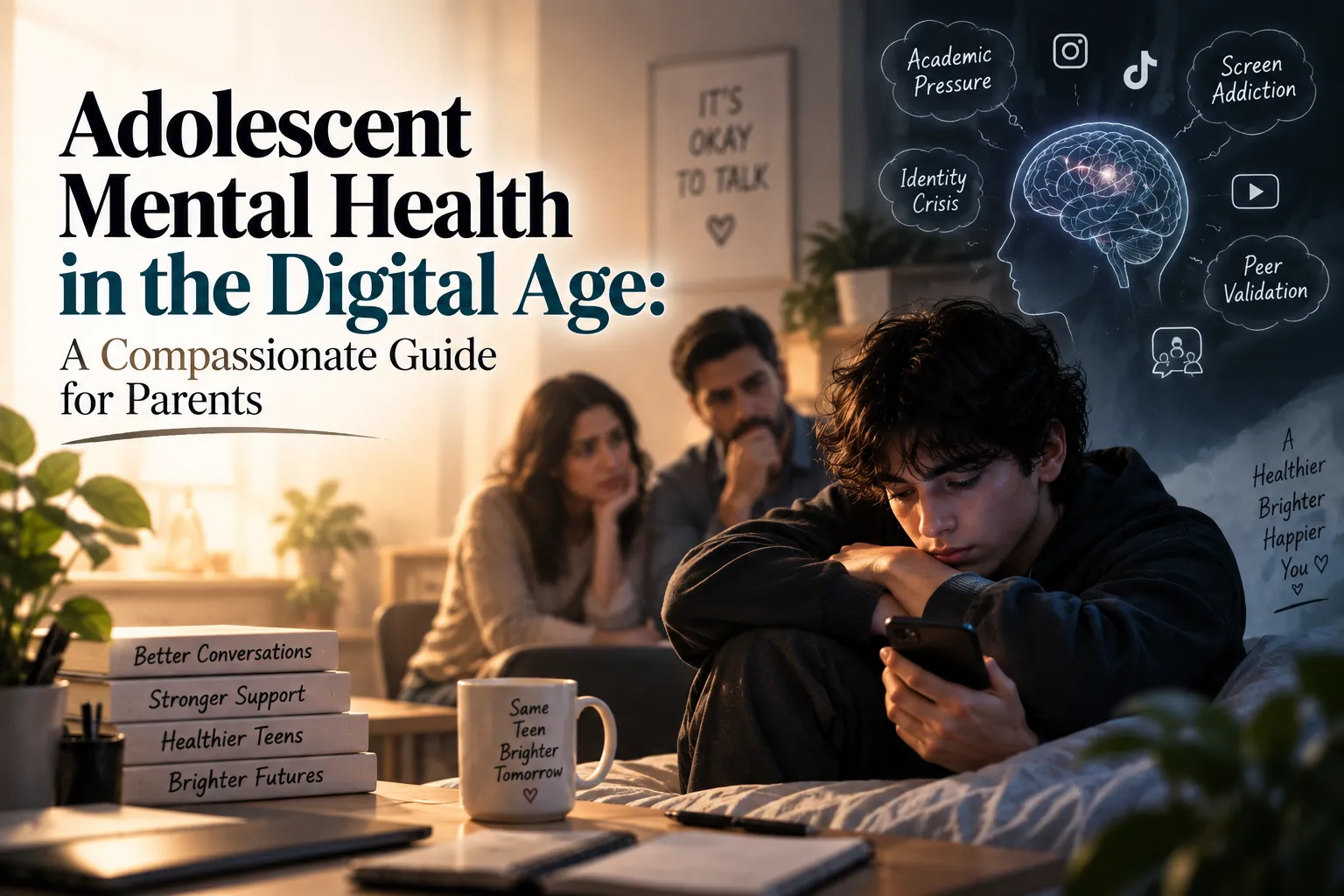
Adolescent Mental Health in the Digital Age: A Compassionate Guide for Parents
Navigating teenage academic pressure, screen addiction, identity crises, and emotional vulnerability with non-judgmental clinical support.
Dr. Bhoomi Raval
Consultant Psychiatrist (Gold Medalist) • MANAM Mental Health Initiative
- 1Teenage brain remodeling makes adolescents hypersensitive to social rejection and peer validation.
- 2Anger and irritability in adolescents are frequently masked presentations of underlying anxiety or sadness.
- 3Curiosity and listening build more psychological safety than interrogating and lecturing.
The Developing Adolescent Brain
Between ages 12 and 22, the human brain undergoes substantial neuro-synaptic pruning. The emotional limbic system matures years before the executive prefrontal cortex—the region responsible for impulse control, long-term planning, and emotional regulation.
Add algorithmic social media feeds engineered to capture attention, intense academic competition, and shifting peer dynamics, and today's youth face unprecedented psychological pressures.
Recognizing Red Flags Beyond Normal Teenage Moods
While mood fluctuations are part of growing up, watch for: sudden withdrawal from friends and family, drastic decline in academic performance, changes in sleep or appetite, self-harm marks, and pervasive irritability.
Bridging the Communication Gap
Replace: 'Why are you always on your phone?' with: 'I notice you've been seeming drained lately. I'm here whenever you want to talk, no lectures.'
Providing a neutral, safe clinical space where teenagers can speak freely with a compassionate psychiatrist often transforms family harmony.
“When a teenager feels seen and heard rather than corrected and criticized, their defensive walls lower and genuine healing begins.”
Have questions about your mental wellness?
Connect directly with Dr. Bhoomi Raval at Kotak Hospital in Rajkot or book a confidential online video consultation.